How to Sell Milk and Dairy Products Online
A practical guide for dairy farms and creameries doing home delivery, whether you're just starting out or already juggling a website, a spreadsheet, and a stack of texts.
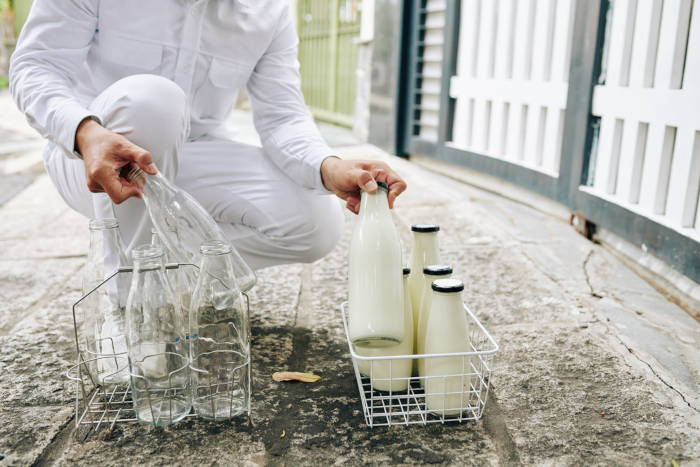
It's 6 a.m. and you're checking texts before you've had coffee, someone wants to skip next week's delivery, someone else is asking if you take Venmo, and there's still milk to bottle and a route to plan. If your farm's whole operation is held together by a website, a spreadsheet, and a phone full of texts, you're not alone, and you're not doing it wrong. This guide covers the parts that actually trip farms up: pricing, choosing a sales channel, fixing or building your website, keeping orders straight, and running your delivery route without losing a day to it.
Where the Day Gets Away From You
Before getting into fixes, it helps to name what's actually eating the time. For most home-delivery dairy operations, it's some combination of these:
Scattered tools
A website, a spreadsheet, a text thread, and a separate POS, none of them talking to each other.
Routes built by hand
Redrawing the route every time someone adds, skips, or cancels an order.
Pricing confusion
One number trying to work for retail, wholesale, and everything in between.
Chasing payments
Texting customers after the fact instead of charging automatically.
Missed orders
Something slips through when tracking depends on remembering three different places.
Perishable pressure
An inefficient route on a perishable product shows up later as spoiled, wasted stock.
None of these are unusual, and none of them mean you're doing something wrong. They're just what happens when a business outgrows the tools it started with. The rest of this guide walks through each one, in the order they usually come up.
Getting Your Pricing Right
Pricing is where most dairy farms either make their margin back or quietly lose it. A farm stand customer is paying for convenience and a direct relationship. A wholesale buyer is paying less per unit for volume and predictability. Blending both into one number almost always shortchanges one side, usually you.
Common Markup Approaches
| Approach | How it works | Where it breaks down |
|---|---|---|
| Cost-plus | Add a fixed markup on top of production cost | Doesn't account for delivery time or packaging by product |
| Market match | Price close to nearby farm stands or stores | Ignores your own actual cost, easy to underprice |
| Tiered by channel | Separate prices for retail, wholesale, and farm store | Needs a system that applies the right price automatically |
Most farms land somewhere between the first and third, cost-plus as the baseline, tiered by channel once retail and wholesale both exist.
Before You Set a Price
- What it actually costs you to make one unit, ingredients and labor included
- Your retail price, and what margin that leaves after cost
- Your wholesale price, and what margin that leaves after cost
- Whether that gap is one you're setting on purpose, not by accident
Choosing How to Sell
The right setup usually comes down to how repeatable your business is. Rather than describing each option in the abstract, here's a simple way to match your situation to a starting point.
Some farms also sell into wholesale, restaurant, or grocery accounts alongside their direct sales. That's its own path, with its own pricing and expectations, but the same principle applies: it works best when it runs through the same system as everything else, not a separate spreadsheet just for those buyers.
Your Website: Fixed or Built From Scratch
Where you stand here usually falls into one of three spots, and each one has a different next step.
Smart FDS gives your farm a customer-facing storefront built around subscriptions and recurring orders from the start, so you're not bolting a spreadsheet onto a website that was never built for it.
Managing Orders Without Losing Your Mind
The problem with spreading orders across email, text, and a spreadsheet isn't any one tool. It's that they don't talk to each other.
| Scattered tools | One connected system |
|---|---|
| Order comes by text, gets copied into a spreadsheet | Order lands in one place, no copying |
| Payment tracked separately, easy to lose track of who paid | Payment status attached to the order itself |
| Inventory guessed at across channels | Stock synced across web, farm store, and wholesale |
| Route re-planned by hand each time | Route builds itself from the day's actual orders |
Worth knowing: switching systems doesn't have to be disruptive. Most farms move products and customers over gradually, running old and new side by side until they're confident.
Already on Another Platform? Here's What to Check
If you're already using some kind of software, on a spreadsheet you've built yourself, or happy with what you have, the question isn't whether a tool exists, it's whether it actually fits how a dairy operation runs. Most general-purpose delivery or e-commerce tools are built for any product, not specifically for perishable, route-based, subscription-heavy dairy sales. A few questions worth asking about whatever you're using now:
- Does it separate retail and wholesale pricing automatically, or does that still happen by hand?
- Does it track bottle or container deposits and returns, or is that still a separate note somewhere?
- Does route planning happen inside the same system, or does it need a third-party app bolted on?
- Can your customers pause, skip, or edit their own orders, or does that still come through you?
If you're answering "still by hand" or "still through me" to more than one of those, that's usually the actual cost of staying put, not the switching itself.
Planning Delivery Routes That Actually Work
Milk's short shelf life makes on-time, well-planned delivery essential. A route drawn up once and never revisited gets worse over time, as stops get added, skipped, or moved, and an inefficient run on a perishable product shows up later as spoiled, wasted stock. Here's what the full cycle looks like when it's working:
Customer orders
One-time or on a recurring schedule
Route builds itself
Based on the day's actual stops
Driver delivers
Logs bottle returns from the driver app
Payment charges
Automatically, after delivery
Why Manual Routing Falls Apart as You Grow
A route that made sense with 15 stops usually stops making sense at 40. Every skip, add, or address change means redrawing it by hand, and a driver following an outdated route wastes fuel, time, and eventually product. Planning around the day's actual orders, rather than a fixed loop, keeps both cost and spoilage down as the list of stops grows.
Subscriptions and Repeat Customers
Repeat customers are what make a route worthwhile in the first place, since one-off orders rarely cover the cost of delivery on their own. The trade-off is that subscription customers also notice, and remember, when something slips. A missed delivery or a confusing swap can push a loyal customer elsewhere. Giving them a way to pause, skip, or swap on their own removes a steady trickle of texts, and keeps your route accurate without extra work on your end.
"We used to lose hours every week planning routes and chasing down payments. Now that whole side of the business runs on its own, and we've since added a second delivery route."
Common Mistakes to Avoid
- One price list for both wholesale and retail customers
- Underestimating packaging, deposits, and delivery cost per order
- Running subscriptions, one-off orders, and wholesale with no shared system
- Inconsistent customer communication across text, email, and social
- No easy way for customers to pause, skip, or edit their own orders
- Software so complicated only one person on the farm knows how to use it
What Smart FDS Actually Handles
Everything above maps to a real, working part of the platform, not a roadmap item.
Route Optimization
Built in, no third-party routing app needed
Orders and Subscriptions
Recurring billing that matches your delivery schedule
POS and Billing
Farm store and delivery run through the same ledger
Customer Portal
Customers manage skips, pauses, and payment on their own
See the full breakdown on the features page, or walk through the process step by step on how it works.
What This Looks Like Once It's Simple
On your farm, an order comes in once, from whichever channel your customer prefers, and everyone on your end sees the same thing: what was ordered, whether it's paid, and where it needs to go. Your subscriptions renew on their own. Your wholesale pricing sits apart from retail without anyone applying a different number by hand.
The usual hesitation isn't really about wanting to switch, it's finding time to learn something new on top of an already full week. That's fair, and it's the real barrier more often than resistance. If you and your team can use email, you can run orders, pricing, and deliveries here, and most farms are fully switched over within a week, with our team setting it up alongside you.
Go Further
More ways to see how Smart FDS fits a home-delivery dairy operation.