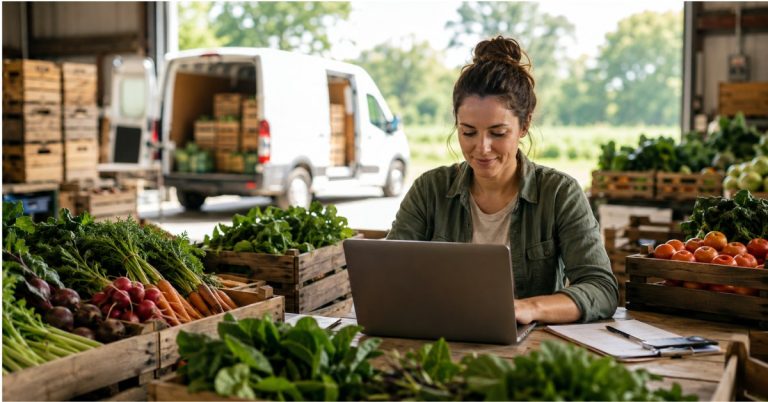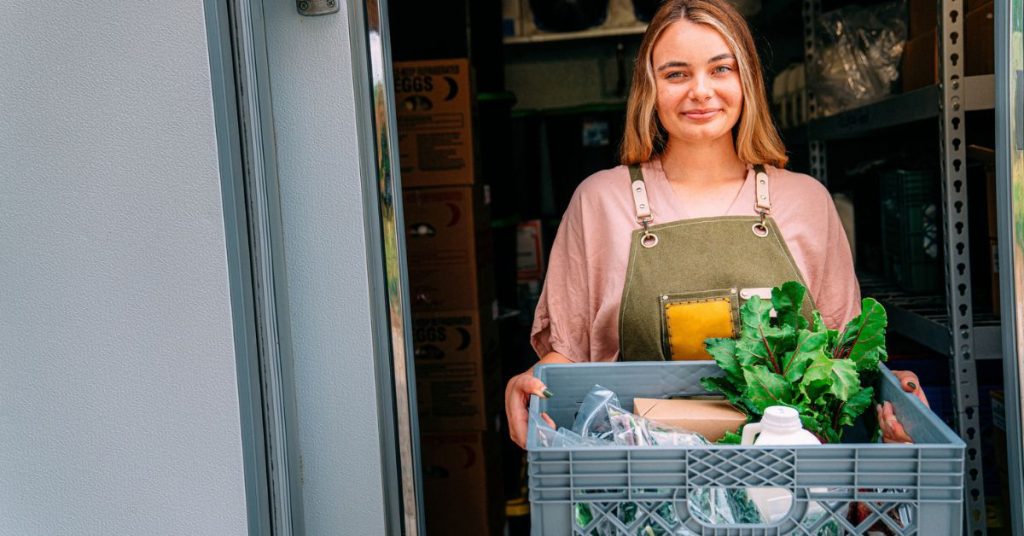
Most small farms grow more than they can sell at a farmers market. Most institutional buyers want more local food than any single farm can reliably supply. A food hub solves both problems at once by sitting in the middle – aggregating products from multiple farms and connecting them to buyers who need consistent, local supply.
This guide covers what a food hub is, how to start one, and what running one successfully looks like week to week.
What Is a Food Hub?
A food hub is a business or organization that aggregates, stores, and distributes locally and regionally produced food from multiple farms to buyers. It sits between local farms and their customers, handling the logistics of collecting products from producers and getting orders to buyers on time.
Food hubs exist because most individual farms are too small to supply institutional buyers, grocery stores, or large wholesale accounts on their own. A food hub solves this by pooling supply from multiple farms and delivering it as one coordinated operation.
Quick Answer
A food hub is a centralized operation that collects products from multiple local farm producers and distributes them to buyers, including restaurants, institutions, grocery stores, and direct consumers. It manages producer relationships, inventory aggregation, order fulfillment, and delivery logistics. Food hubs can be run by farms, cooperatives, nonprofits, or private businesses.
Key Takeaways
- A food hub aggregates products from multiple farms and manages distribution to buyers
- Food hubs serve a wide range of buyers including restaurants, schools, grocery stores, and individual consumers
- Running a food hub requires systems for producer management, order aggregation, inventory, billing, and delivery routing
- The biggest operational challenges are managing multiple producer schedules, variable inventory, and delivery logistics at scale
- Food hub software helps automate billing, route planning, producer management, and customer ordering in one place
How a Food Hub Works
At its core, a food hub does four things: it sources products from local producers, aggregates those products in one place, manages orders from buyers, and handles distribution.
Here is the basic flow:
- Producers list available products and quantities with the food hub on a set schedule.
- Buyers place orders through the food hub’s online store or ordering system.
- The food hub matches buyer orders to available producer inventory and communicates pickup or delivery requirements to each producer.
- Products arrive at the hub’s facility or are collected from farms on a set schedule.
- Orders are packed and dispatched to buyers via delivery routes or scheduled pickup points.
- Billing runs for buyers, and producer payments are calculated based on what sold.
This sounds straightforward on paper. In practice, coordinating multiple producers, managing variable inventory, and running delivery routes requires real systems, not spreadsheets.
Types of Food Hubs
Not all food hubs work the same way. The model you choose depends on your available infrastructure, the producers you work with, and who your buyers are.
Aggregation and Distribution Hubs
These hubs collect products from farms, store them in a central facility, and distribute to buyers. They typically serve wholesale accounts like restaurants, hospitals, and schools alongside direct consumers.
Farm Direct Hubs
Some food hubs operate without a central warehouse. Producers deliver directly to customers or drop points on a coordinated schedule managed by the hub. This reduces storage costs but requires tight scheduling.
Producer-Owned Cooperative Hubs
A group of farms jointly operates the hub, sharing costs and decision-making. Each farm contributes products and the hub handles sales, marketing, and distribution on behalf of all members.
Virtual Food Hubs
Virtual hubs manage orders and logistics through software without owning physical storage. Products move directly from farms to buyers, with the hub handling the coordination, billing, and communication.
Why Food Hubs Exist: The Market Gap They Fill
Most small and mid-size farms grow more than they can sell at a farmers market or farm stand. And most institutional buyers, including schools, hospitals, and corporate cafeterias, want consistent supply that a single farm usually can’t guarantee.
A food hub bridges this gap. It gives farms access to larger, more consistent markets. It gives buyers access to local, traceable products without the complexity of managing dozens of individual farm relationships.
According to the USDA Agricultural Marketing Service, food hubs play a critical role in expanding market access for small and mid-size farms that would otherwise struggle to reach institutional and wholesale buyers.
This is why food hubs have grown steadily across the U.S. over the past decade, particularly in regions with strong farm communities and demand for local food from schools, hospitals, and retailers.
What Does a Food Hub Sell?
Food hubs can sell almost any locally produced product, but the most common categories are:
- Fresh vegetables and fruit
- Dairy products including milk, cheese, butter, and cream
- Meat and poultry
- Eggs
- Grains and dry goods
- Baked goods and value-added products
- Honey and specialty products
The specific mix depends on the farms in your network and the buyers you serve. Dairy-focused hubs are common in states with strong milk production. Produce-focused hubs are typical in agricultural regions with diverse cropping systems.
Who Buys From Food Hubs?
Food hubs serve a wide buyer base. Understanding your target buyers before you start helps shape every other decision from pricing to delivery scheduling.
Institutional buyers such as schools, universities, hospitals, and corporate cafeterias buy in volume and often have specific procurement requirements. These accounts are valuable for consistent revenue but may require more paperwork and lead time.
Restaurants and food service businesses value local sourcing for menu differentiation. They often buy smaller quantities but at higher price points.
Grocery and retail stores buy for local product programs. They need consistent packaging, labeling, and reliable weekly supply.
Direct consumers buy through an online store or subscription box program. This segment often yields the highest margins but requires more customer service.
Other food hubs and distributors sometimes buy from food hubs to supplement their own supply.
How to Start a Food Hub: Step-by-Step
Starting a food hub is not a small undertaking. The farms that succeed do so because they plan the operational side carefully before they open to buyers.
Step 1: Define Your Model and Market
Before anything else, decide who you are buying from and who you are selling to. Are you focused on wholesale institutional buyers, direct consumers, or both? Are you serving a specific region or product category?
This decision shapes everything: your facility requirements, your pricing structure, your delivery geography, and how you manage producers.
Step 2: Build Your Producer Network
Identify the farms in your area whose products align with your buyer demand. Start with a small, reliable group. It is much easier to expand a working producer network than to recover from supply inconsistency in your first months.
Set clear expectations with each producer from day one:
- What products they will supply and in what quantities
- Minimum quality and packaging standards
- Order lead times and delivery or pickup schedules
- How and when they will be paid
A written producer agreement protects both parties and reduces misunderstandings. Consider having your agreement reviewed by an attorney familiar with agricultural contracts.
Step 3: Set Up Your Pricing Structure
Food hubs typically operate on a margin model. You pay producers a set price and sell to buyers at a markup that covers your operating costs and generates a return.
Pricing needs to account for:
- Producer costs and fair farm gate pricing
- Hub operating costs including labor, storage, and delivery
- Market pricing for comparable products in your region
- Different price tiers for wholesale vs. retail vs. institutional buyers
Wholesale and retail pricing will differ significantly. Institutional buyers often expect volume discounts. Direct consumers may pay closer to retail. Build your pricing model before you commit to producer agreements.
Step 4: Set Up Your Ordering System
Buyers need a reliable way to place orders, and you need a system that aggregates those orders and communicates them to the right producers.
A basic ordering system handles:
- An online catalog of available products by producer
- Order windows with clear cut-off times
- Automatic order confirmation to buyers
- Aggregated pick lists sent to producers
As your hub grows, managing this manually becomes the first thing that breaks. Farms and hubs that start with a proper ordering system grow faster because they are not rebuilding their processes mid-season.
Step 5: Plan Your Delivery and Distribution
Map your delivery territory before you start taking orders. Decide:
- What days you deliver and to which areas
- Whether you use your own vehicle or contract with a driver
- What your route cut-off policy is (when orders must be placed before a delivery run)
- Whether you offer pickup points for buyers who prefer to collect orders
Route efficiency matters from day one. Delivery costs are one of the most controllable expenses in a food hub operation. Disorganized routes waste fuel and driver time every single week.
Step 6: Handle Producer Payments and Reconciliation
One of the most time-consuming parts of running a food hub is calculating what each producer gets paid after each order cycle. You need to track what was sold, at what price, with what margin applied, and when payment is due.
Set a clear payment schedule with producers at the start. Weekly or bi-weekly payments are common. Keeping this on a consistent schedule builds trust with producers and makes your bookkeeping predictable.
Step 7: Launch and Refine
Start with a soft launch. A small group of buyers and producers lets you identify issues in your ordering, packing, and delivery process before they affect your reputation at scale.
Collect feedback early and often. The first season of a food hub operation is a learning process, and the farms that treat it that way tend to scale more successfully than those who try to be perfect on day one.
Running a Food Hub Day to Day
Getting a food hub started is one challenge. Keeping it running efficiently week after week is where most operations struggle.
Managing Multiple Producers
Every producer has their own schedule, product availability, and quality standards. Keeping track of who is delivering what, when, and in what quantities requires consistent communication and a system that does not depend on text messages and phone calls.
Weekly producer communication should cover:
- Available inventory for the coming order window
- Any product shortages or quality issues
- Changes to pickup or delivery schedules
- Payment confirmations from the previous cycle
Managing Buyer Orders and Expectations
Buyers expect consistency. If a product is listed and ordered, they expect it to arrive. Managing buyer expectations around seasonal availability, substitutions, and order changes is one of the ongoing operational challenges every food hub faces.
Clear order confirmation, proactive communication about substitutions, and reliable delivery timing build the buyer trust that keeps accounts coming back.
Keeping Inventory Accurate
Food hubs deal with perishable, variable inventory. What a producer brings in one week may differ from what they committed to at the start of the order window. Tracking this accurately prevents overselling, reduces waste, and keeps your packing lists reliable.
Running Delivery Routes Efficiently
Most food hubs run at least one delivery route per week. As the buyer base grows, routes get more complex. Adding more stops without optimizing the route adds cost without adding revenue.
Route planning should account for:
- Stop sequence by geography, not just address order
- Delivery time windows for institutional buyers
- Vehicle capacity and product temperature requirements
- Driver instructions and delivery confirmation
Common Mistakes Food Hub Operators Make
Underpricing at the start. Many food hubs price too low to attract buyers and then find it impossible to cover costs. Price correctly from the beginning and adjust based on volume, not panic.
Taking on too many producers too quickly. A diverse producer network sounds appealing, but managing twelve producers in your first season is harder than managing three. Build slowly.
Not setting clear order cut-offs. Without firm cut-off times, buyers make last-minute changes that disrupt packing and create delivery errors. Set a cut-off and hold to it from day one.
Manual billing for too long. Many food hubs start with invoices sent by email or text. This works for a handful of buyers. It breaks down fast as the buyer base grows and payment tracking becomes a weekly headache.
Skipping the producer agreement. Verbal agreements with producers create confusion about pricing, quality standards, and payment timing. A written agreement, even a simple one, prevents most producer disputes.
Building routes around habit rather than efficiency. Delivery routes that were logical with five stops often become inefficient at fifteen. Review and re-optimize routes at least every season.
How Food Hub Delivery Management Software Helps
Managing a food hub manually works at a small scale. Once you have multiple producers, a growing buyer list, multiple delivery routes, and weekly billing cycles, the manual approach becomes the biggest constraint on growth.
Smart FDS is built for farm operations that manage aggregation, producer relationships, and direct delivery. For food hub operators, it handles:
Producer and inventory management. Track what each producer is supplying each week, manage product availability, and communicate order requirements automatically.
Wholesale and retail pricing. Set different price tiers for institutional buyers, retail accounts, and direct consumers. Apply minimum order quantities and custom delivery fees by customer type.
Order management and cut-offs. Buyers place orders through an online portal. Orders lock automatically at cut-off, generating accurate pick lists without manual data entry.
Route-based delivery scheduling. Build delivery routes with route-specific cut-off times. Multiple pickup and drop-off points managed from one system.
Recurring billing. Weekly or monthly billing cycles run automatically. Buyers pay on schedule without manual invoicing.
Route optimization. Your delivery run is organized and optimized automatically based on current stops. Drivers work from a mobile app rather than a printed list.
Customer self-service dashboard. Buyers manage their own orders, billing, and delivery preferences without calling you.
Benefits of Running a Food Hub
Market access for small farms. Producers who couldn’t reach institutional or wholesale buyers on their own gain access through the hub’s consolidated supply and relationships.
Predictable revenue. Consistent weekly order cycles with recurring buyers create more reliable income than farmers market or seasonal sales alone.
Community impact. Food hubs keep local food dollars in the region and support the economic viability of small farms.
Buyer convenience. Buyers get local products from multiple farms through a single ordering relationship and delivery schedule.
Scalability. A well-run food hub can grow its producer and buyer network without proportional increases in management time, especially with the right systems in place.
Challenges and Limitations to Consider
Running a food hub is not easy. A few realities worth knowing before you start:
Margins are thin. Food hubs operate in a competitive market for local food. Managing costs tightly, especially delivery and labor, is essential to staying financially viable.
Seasonal supply variation creates buyer management challenges. Institutional buyers in particular need consistent supply. Managing expectations around seasonal availability requires proactive communication and sometimes difficult conversations.
Starting capital requirements. Setting up storage, vehicles, ordering systems, and initial marketing requires capital before revenue starts flowing. Budget carefully.
Producer reliability varies. Even with strong agreements, producers sometimes have crop failures, animal health issues, or logistical problems. Building redundancy into your producer network reduces but doesn’t eliminate this risk.
Frequently Asked Questions About Food Hubs
What is a food hub? A food hub is a business or organization that aggregates, distributes, and markets locally and regionally produced food from multiple farms. It manages the logistics between producers and buyers, handling ordering, storage, delivery, and billing in one operation.
How does a food hub make money? Food hubs typically operate on a margin model, buying from producers at a set price and selling to buyers at a markup that covers operating costs. Some food hubs also charge producers a membership or listing fee. The specific model varies based on the hub’s structure and market.
What is the difference between a food hub and a farmers market? A farmers market is a venue where producers sell directly to consumers in person. A food hub operates year-round, serves a wider range of buyers including wholesale and institutional accounts, and manages logistics on behalf of producers. Producers at a food hub do not need to be present at the point of sale.
How many producers does a food hub need to operate? There is no fixed minimum, but most food hubs start with three to five reliable producers and expand from there. Starting small allows you to build consistent operations before adding complexity. The right number depends on your buyer demand and the volume each producer can supply.
What software do food hubs use to manage operations? Food hubs use a combination of ordering systems, inventory management tools, and delivery software. Platforms built specifically for farm and food hub operations, like Smart FDS, handle producer management, order aggregation, route scheduling, and billing in one system rather than requiring multiple separate tools.
Can a single farm run a food hub? Yes. Some farms operate food hubs as an extension of their own direct sales operation, sourcing complementary products from neighboring farms to offer buyers a fuller product range. This model is common among dairy farms that add eggs, produce, or meat from nearby producers to their delivery operation.
What is the USDA’s role in food hubs? The USDA Agricultural Marketing Service tracks food hub activity across the U.S. and has published research on food hub business models, financial performance, and market access. The USDA also offers grant programs through which some food hubs have secured funding for infrastructure and operations.
Sources and References
- USDA Agricultural Marketing Service – Regional Food Hub Resource Guide: ams.usda.gov
- National Good Food Network – Food Hub Resources: ngfn.org
- Wallace Center at Winrock International – Food Hub Research: wallacecenter.org
The Bottom Line
A food hub connects local farms to buyers they couldn’t reach alone. It manages the aggregation, distribution, and billing that makes that connection work reliably week after week.
Starting one requires clear planning: a defined market, a reliable producer network, a structured ordering system, and a delivery operation that runs efficiently from the start. The farms and operators that succeed with food hubs are the ones who treat operations as seriously as they treat sourcing and sales.
If you’re running a food hub or planning to start one, the right systems make the difference between a program that grows steadily and one that stalls in manual admin work.
Schedule a free demo with Smart FDS and see how farms and food hub operators manage producers, orders, routes, and billing in one place.